Turn Customizable Bulk Items Into a Strategic Advantage
Managing print, promo, and apparel across locations feels simple at first, until Q4 hits. Suddenly there are holiday gifts, open enrollment packets, sales kickoffs, New Year branding, and every team wants something branded right now. If orders live in email threads and spreadsheets, things get messy fast.
An online company store helps by putting everything in one place. But when items are customizable and ordered in bulk, new questions pop up: How much should we stock? When do we reorder? What should be printed ahead of time and what should wait for on-demand production?
At BRIDGE Printing & Promotional Products, Inc., we build and manage online company stores, then back them up with printing, promo, apparel, and fulfillment. Our goal is to help you find that sweet spot between cost, speed, and brand control. Here we will walk through clear, practical ways to forecast inventory, set reorder points, and choose the right mix of on-demand and stocked customizable bulk items.
Why Customizable Bulk Items Belong in Your Online Store
When every department orders branded items their own way, brands drift. Logos stretch, wrong colors slip in, old taglines stick around. That is why moving customizable bulk items into a managed store is such a smart move.
With a store, you can:
- Lock in approved brand templates, colors, and fonts
- Give teams simple, guided customization options
- Keep all orders running through one trusted system
Think about items like:
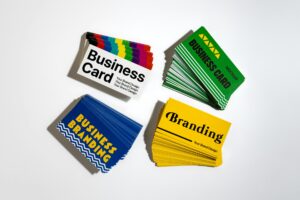
- Business cards and stationery
- Branded apparel with locations, departments, or names
- Sales kits and leave-behind packets
- HR packets and training materials
Instead of one-off designs for each request, users pick from set options. That means less back-and-forth, fewer special projects, and fewer side orders with random vendors. Approvals become cleaner, and your design team can focus on bigger projects.
There are cost and time wins too. When popular items are ordered through one store, you can plan ahead and take advantage of bulk print runs and grouped production. That lowers rush work, keeps lead times more predictable during busy seasons, and helps Q4 and Q1 planning feel less stressful.
Every order placed through the store also creates useful data. Over time, this data turns into a clear view of what actually moves, which items are seasonal, and which products are just taking up shelf space. That is where better forecasting starts.
Forecasting Demand for Branded Inventory That Actually Moves
Good forecasting is not about guessing, it is about learning from real behavior. A strong starting point is 12 to 18 months of store data, if you have it. Look for patterns like:
- Average units per month for each item
- Items that spike around certain events or seasons
- Products that rarely move at all
Then, layer in what you know will happen again. For most organizations, that includes things like:
- Fall trade shows and conferences
- Holiday gifting and client appreciation
- Open enrollment or benefits communication
- New Year sales and brand rollouts
- Hiring waves or training seasons
Next, make sure you treat different item types differently. For example:
- Operational print like forms, labels, and inserts often has steady pull
- Evergreen swag like pens, notebooks, and basic tees tends to move year-round
- Event shirts, dated planners, or seasonal kits can spike hard, then stop
Each group needs its own forecast, because the risk of leftover stock is very different.
This is where a partner that lives in print and branded merch every day can help. At BRIDGE, we look at your store data, your internal calendar, and general usage patterns for similar items. From there, we help you pick realistic order sizes and reorder rhythms that aim to keep items flowing without clogging your shelves.
Setting Smart Reorder Points and Safety Stock Levels
Once you have a basic forecast, the next step is deciding when to trigger a reorder. Start by asking one simple question: How painful is a stockout for this item?
A missing packaging insert might be annoying but manageable. A missing HR onboarding kit when a new hire walks in the door is more serious. Compliance forms can be even more sensitive. Your answers here define your “service level” for each product.
Then, think about three simple pieces of information for each item:
- How many units you use in a typical month
- How long it takes, from placing an order to having items ready to ship
- How much that monthly use can jump up or down
You do not need complex math. If you usually use a certain number of units per month and production plus shipping takes a set number of weeks, your reorder point should be a bit above that. That way there is enough stock on hand to cover orders while the next batch is being made.
Safety stock is your backup cushion. You might add a buffer for:
- Fast movers like core apparel or popular swag
- Items tied to things that can spike, such as events or hiring
- Products with longer production or decoration times
The goal is a reasonable buffer, not a warehouse packed with old versions. For slow movers, you might choose a much smaller safety stock, or even shift those items to on-demand.
When your store is set up right, you should not have to track all this manually. We can set up low-inventory alerts, approval workflows, and even auto-generated POs in the background, so your team can focus on using the items, not counting them.
Choosing Between On-Demand and Stocked Bulk Custom Items
Not every item belongs in bulk inventory. Some make more sense as on-demand production.
On-demand is a good fit when:
- Personalization is highly unique, like names or special fields
- Usage is unpredictable, and you are not sure what will stick
- Branding or artwork changes often
- The item is niche, with a small or unknown audience
In those cases, you trade a bit of speed and per-unit cost for very low risk of waste.
Stocking items is smarter when:
- The item is truly evergreen and branding is stable
- You see steady order volume month after month
- Faster ship times matter for internal service levels
- You want simpler, one-click ordering for your teams
The best setups often use a hybrid model. For example:
- Stock blank apparel in core sizes and colors, then add decoration when orders come in
- Keep best-selling colors or styles on hand, and produce specialty variations on-demand
- Pre-plan short seasonal collections for Q4 gifting or Q1 kickoffs, with clear start and end dates
When we help clients decide, we look at both numbers and experience. We weigh total landed cost, including storage and picking, against on-demand costs and risks of leftover items. Then we balance that with user experience: how fast things need to arrive, how much personalization matters, and how broad the audience really is.
Turning Forecasting Insights Into a High-Performing Company Store
All of this works best if you start small and build. One helpful step is choosing a pilot list of 10 to 20 customizable bulk items. Good candidates include:
- Top movers from the past year
- Must-have operational forms and inserts
- Core swag for employees and events
- Known Q4 gifting and Q1 rollout needs
Apply clearer forecasting, smart reorder points, and an on-demand vs. stocked choice to just that set first. As those items run more smoothly, expand the approach to the rest of your catalog.
Next, bring the right people into the plan. Many teams do well with a shared calendar that covers:
- Marketing campaigns and product launches
- Trade shows and conferences
- Seasonal gifting or appreciation programs
- Hiring plans and training sessions
When this sits next to your store data, patterns become obvious. You can plan print runs ahead of busy events, right-size safety stock before winter weather slows shipping in areas like the Northeast, and avoid storing old event gear long after it is useful.
At BRIDGE Printing & Promotional Products, Inc., we spend our time helping organizations turn branded items into a smooth, repeatable system instead of a year-end headache. With the right mix of forecasting, reorder rules, and stocked versus on-demand models, your online company store can shift from “order-taking tool” to a quiet engine that supports your brand all year long.
Get Started With Your Project Today
If you are ready to turn your ideas into high-impact print or promo materials, we are here to help you choose the right customizable bulk items for your goals and budget. At BRIDGE® Printing & Promotional Products, Inc., our team can guide you from concept through production so your brand looks consistent across every piece. Tell us what you are planning and we will recommend practical, cost-effective options that fit your timeline. Have questions or need a fast quote? Simply contact us to get started.