Year-end reorders should do more than refill an empty supply closet. They are a chance to look closely at what your teams actually use, what is sitting unused, and what may change once the new year begins. Holiday closures, remaining budget, Q1 campaigns, and new location plans can all affect the right order size.
At BRIDGE® Printing & Promotional Products, Inc., we help organizations make these decisions with the full picture in mind. The choice between on-demand printing services and bulk runs is not always either-or. It depends on the material, the demand, and how easily your team can store, track, and distribute it.
Turn Reorders Into Smarter Inventory Decisions
A year-end order can feel simple: supplies are low, so it is time to reorder. Yet branded materials come with a few extra questions. Will the design remain current? Does every location need the same version? Will the item support a planned event or campaign? Can your team safely store a large quantity without losing track of it?
Different materials call for different ordering methods. Business forms may move steadily all year, while an event flyer might only be useful for a few weeks. Apparel may need a mix of sizes, and location signage may require approved local details.
Before placing one large order for everything, we recommend sorting materials by how they are used:
- Steady, year-round items with predictable demand
- Materials tied to a season, campaign, or event
- Pieces that change often because of messaging or compliance updates
- Location-specific items with local names, addresses, or contacts
- Branded products that need careful size, style, or inventory management
This kind of review turns ordering into a planning tool. It also helps you consider storage space, production timing, customization needs, and the internal effort required to move materials across offices or teams.
Match Reorder Volumes to Real Demand
Good reorder decisions start with usage, not guesses. We encourage you to compare what was ordered, what was used, and what remains in inventory. A stack of brochures at one office does not always mean the same brochure is available where another team needs it.
Demand can shift for plenty of reasons. New hires may need onboarding materials. A sales territory may change. A new office may open, or a campaign may require a special version of a core item. Materials with frequent edits are often better suited for on-demand printing services because you are not committing to a large supply before you know what will change.
Stable demand tells a different story. If an item is used regularly across the organization and its content rarely changes, a bulk run may make sense. Common examples include standard envelopes, letterhead, business forms, packaging inserts, evergreen brochures, and familiar promotional materials.
The goal is not to predict every need perfectly. It is to identify which items behave consistently and which ones need more flexibility.
Use on-Demand Printing Services for Flexibility
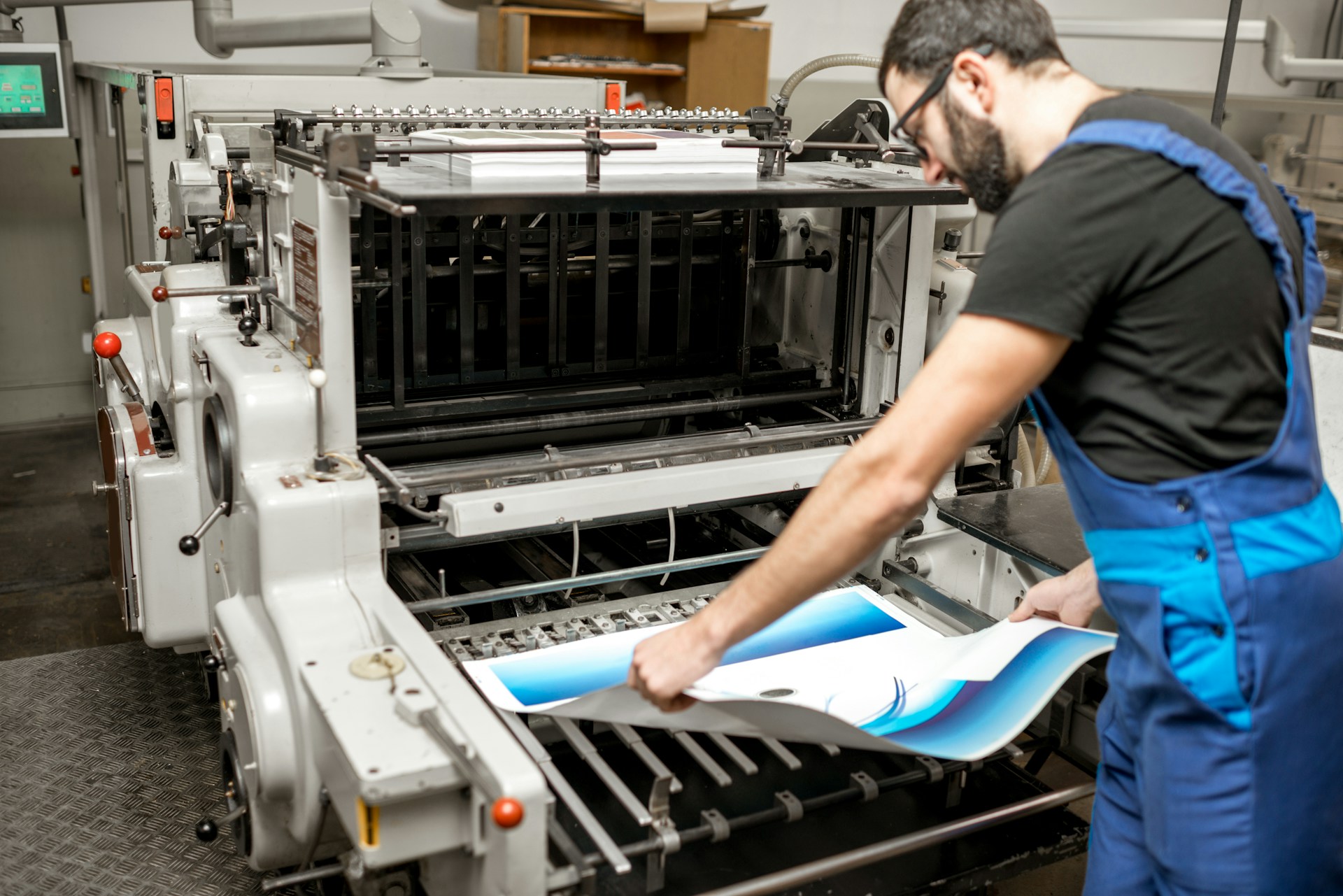
On-demand printing services allow teams to produce materials when they are needed rather than storing every possible version in advance. That can be especially helpful when your brand is evolving, a product detail changes, or a department needs a limited quantity for a particular purpose.
A flexible ordering model can help prevent outdated pieces from lingering in storage after:
- A rebrand or messaging update
- A change in office locations or contact details
- A new product or service launch
- An approved compliance or policy revision
- A regional campaign with different local information
Customization does not have to weaken brand consistency. We can help you keep the main visual standards in place while allowing approved variations for offices, franchise locations, departments, sales regions, or events. Your team gets the version it needs, while the organization keeps control over the logo, colors, messaging, and available options.
Company storefronts can make this process easier to manage. Through a centralized ordering portal, approved users can access current materials, follow set approval steps, and send finished items to the right person or location. That structure can also help keep ordering organized across multiple teams without relying on scattered files or old printed samples.
Choose Bulk Runs for Stable Programs
Bulk production works best when materials have a long shelf life and a steady purpose. Printing a larger quantity at once can simplify planning for items that are used again and again without frequent updates.
We often see bulk runs work well for standard collateral, regularly used forms, evergreen product literature, branded packaging, common event giveaways, and core apparel items that are needed throughout the year. The key is confidence that the item will continue moving.
Storage and distribution matter just as much as the order size. A large run only helps if your organization can see what is available and get it where it belongs. Without a clear process, materials can get buried in a warehouse, duplicated by local orders, or run out unexpectedly at the locations that need them most.
For bulk inventory, we recommend having a clear plan for receiving, tracking, access, and fulfillment. When inventory is visible and controlled, teams can draw from a shared supply instead of placing unnecessary duplicate orders.
Look Beyond the Per-Piece Decision
The best reorder strategy is not always the one that produces the largest quantity or the smallest quantity. It is the one that fits your organization’s real needs. A larger inventory can create problems if it becomes outdated, takes up offsite storage, or requires employees to spend time receiving and redistributing materials.
On-demand ordering can give you a clearer view of how branded items are being used. Orders can be organized by location, department, campaign, or program, helping your team see where materials are going and why. It can also reduce the chance of writing off old versions after a change.
In many cases, a hybrid model is the most practical answer. We can keep high-use, long-lasting materials in bulk inventory while producing personalized, seasonal, location-specific, or frequently updated pieces on demand. That balance gives you dependable access to core items without filling storage with materials that may not stay relevant.
Build a Better Year-End Reorder Plan
Before committing year-end funds, take inventory of what is already on hand. Look for slow-moving items, outdated versions, top-requested products, storage limits, and materials that may benefit from a more flexible ordering model. This review can also reveal where one shared program would make distribution simpler.
Centralizing printing, promotional products, apparel, fulfillment, and storefront management can create a more consistent process across offices, teams, and markets. With the right controls in place, it is easier to keep approved materials available while reducing confusion around ordering and inventory.
A practical plan separates dependable essentials from items likely to change. Keep stable, high-use products easy to access, and give variable materials room to be produced when the need is clear.
Keep Your Reorders Flexible And Ready
At BRIDGE® Printing & Promotional Products, Inc., we help you match reorder timing to real demand without sacrificing consistency. Our on-demand printing services make it easier to replenish the materials you need while avoiding unnecessary storage and outdated inventory. When you are ready to build a more responsive print strategy, contact us to discuss your year-end needs.